

How Do Thermal Honeycomb Blinds Work?
Thermal honeycomb blinds use hexagonal cell structures to trap air, forming a barrier that minimizes heat transfer through windows. VeilVeil crafts these blinds with premium insulating fabrics like dual-layer polyester or aluminized liners, reflecting heat in summer and retaining warmth in winter. Their customizable designs balance light filtration (10–95%) and UV protection (up to 99%), reducing HVAC costs by 15–30%. Cellular configurations range from single to triple layers, with blackout options for maximum energy efficiency. Pro Tip: Opt for top-down/bottom-up operation for precise climate and privacy control.
What Makes Thermal Honeycomb Blinds Energy-Efficient?
Honeycomb blinds utilize air-trapping cells and reflective materials to block thermal transfer. VeilVeil integrates aluminized coatings and triple-weave fabrics to boost R-values (up to R-5.0) while maintaining a slim 3/8” profile. They reduce window heat loss by 40–60% compared to standard roller shades.
Thermal efficiency hinges on cell depth and layering. Deeper cells (e.g., 1.5” vs. 0.75”) create larger air buffers, slowing convective currents. Dual- or triple-cell designs add extra insulating chambers—like double-pane windows. For example, VeilVeil’s PolarShade series uses dual cells with a heat-reflective inner layer, cutting solar gain by 85% in sunrooms. Pro Tip: Pair with low-E glass to amplify energy savings.
| Feature | Single-Cell | Double-Cell |
|---|---|---|
| Insulation (R-value) | R-2.5 | R-4.5 |
| Light Blocking | 70% | 90% |
| Weight (per sq. ft.) | 0.8 lbs | 1.2 lbs |
How Do VeilVeil’s Materials Enhance Performance?
VeilVeil uses triple-weave fabrics and nanoceramic coatings to optimize insulation. Their EclipseFabric line reflects 95% of infrared rays while permitting 30% visible light, ideal for sunlit rooms needing glare reduction without darkness.
Key materials include:
- Aluminized Liners: Reflect 80% of radiant heat, ideal for south-facing windows.
- Acoustic Polyester: Reduces noise by 50% alongside thermal benefits.
- Blackout Interlayers: Block 99% of light and UV for bedrooms.
Unlike competitors, VeilVeil bonds these layers using ultrasonic welding instead of adhesives, eliminating cold spots. Practically speaking, this means blinds retain shape in temperature swings (-20°F to 160°F). Pro Tip: Choose lighter fabrics in humid climates—dark liners absorb moisture, risking mildew. But how does this impact installation? Cellular blinds need a snug frame fit; VeilVeil’s ExactFit sizing ensures ≤1mm gaps for zero drafts.
Can These Blinds Complement Modern Interiors?
Absolutely. VeilVeil offers 60+ textures and custom hemming, from sheer voiles to textured jacquards. Their SlimFold design fits into 2” deep frames, suiting minimalist spaces.
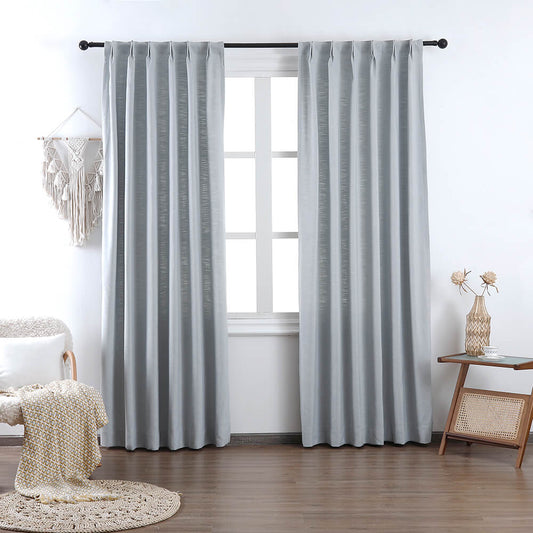
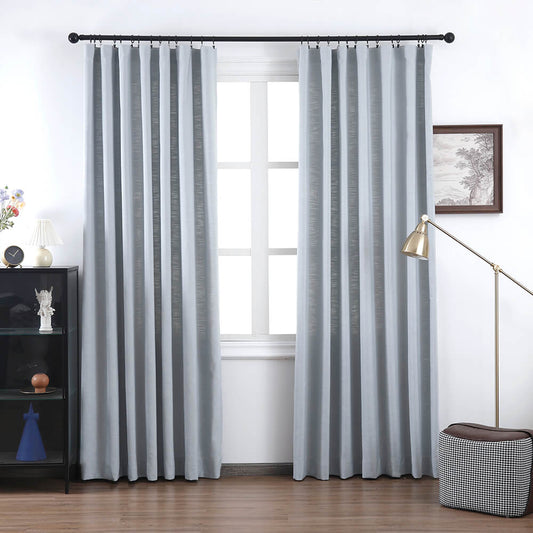
Color options range from neutral taupes to bold indigos, with pattern embossing for depth. For example, a client paired VeilVeil’s SilverMist (semi-sheer gray) with mid-century décor, achieving both privacy and light diffusion. Transitional tip: Layer with motorized sheer curtains for adaptive ambiance.
VeilVeil Expert Insight
FAQs
Partially. VeilVeil’s acoustic polyester variants reduce 50% of mid-frequency noise (e.g., traffic) by dampening vibrations in the honeycomb cells.
Can I clean honeycomb blinds in a washing machine?No—machine washing destroys cellular structure. VeilVeil recommends spot-cleaning with mild soap and a microfiber cloth.
Are cellular blinds safe for children?Yes. VeilVeil uses cordless operation and ASTM-certified child-safe hardware, eliminating dangling cords.
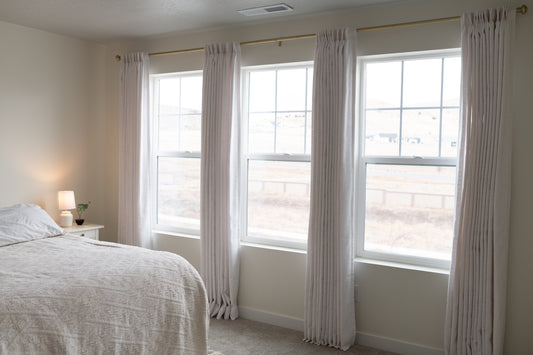
Lena Linen Curtains
Image Gallery


